
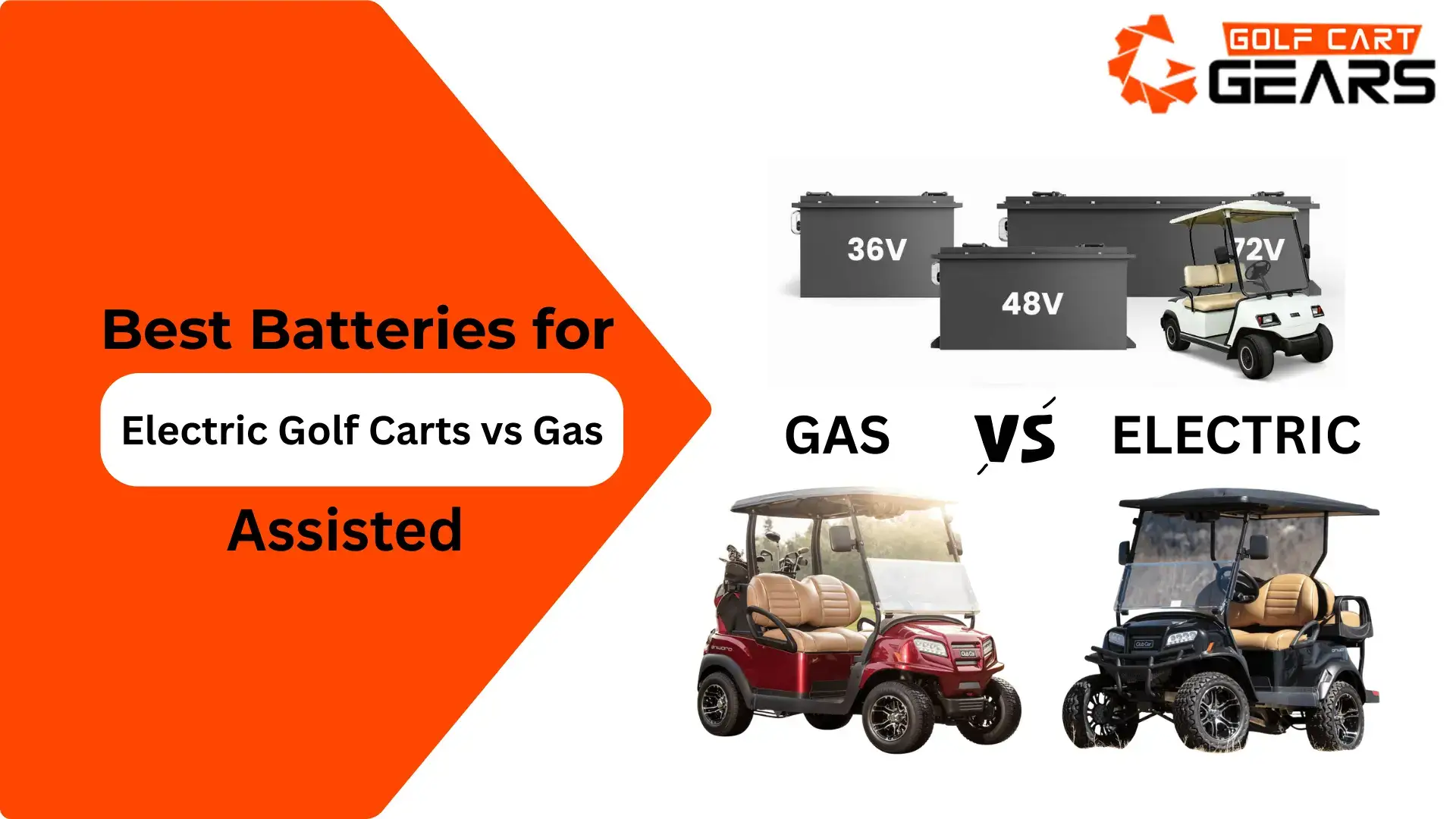
Electric vs Gas-Assisted Golf Cart Power Systems
Before choosing a battery, it’s important to understand how electric and gas-assisted golf carts generate and use power differently.
How Electric Golf Carts Generate Power:
They use electric golf cart batteries as their main source of power. Unlike gas-powered carts, which rely on an engine, electric carts change the energy stored in long-term use golf cart batteries into electricity that powers the motor and moves the wheels. For more options, you can visit golf cart gears.
How Gas-Assisted Golf Carts Use Batteries
While electric golf carts rely on batteries for propulsion, most gas-assisted golf carts work differently.
In a gas cart, the gas golf cart battery primarily provides the power needed to start the engine. Once the engine is started, the alternator takes over, generating electricity to recharge the battery and power golf cart accessories like headlights, turn signals, radios, etc
Most gas carts use a standard 12V starter battery, which is small and less powerful compared to the long-term use batteries in electric carts. These batteries deliver a short amount of high power to start the engine, rather than providing the long, steady discharge needed to drive an electric golf cart motor.
| Feature | Electric Golf Cart | Gas-Assisted Golf Cart |
| Battery Role | Primary power source for propulsion | Supports the engine; mainly starts the engine and powers accessories |
| Battery Type | long-lasting batteries | Starter battery (usually 12V) |
| Discharge Pattern | Long, steady energy delivery | Short, high-power bursts |
| Maintenance Importance | High – affects range and performance | Moderate – mainly affects engine start and accessories |
| Voltage Systems | 36V, 48V, 72V | 12V standard |
Battery Types and Options
The different battery types and optionsavailable help you to select the right one for your golf cart, while keeping the best performance, battery life, and maintenance over time.
Electric Cart: Lead-Acid, AGM, Lithium-Ion:
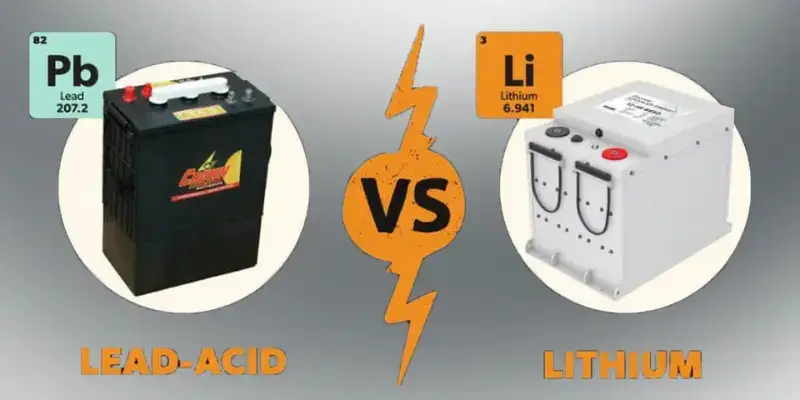
Electric golf cart batteries, the market is dominated by three types: Lead-Acid golf cart batteries, AGM golf cart batteries, and Lithium-Ion golf cart batteries. Each type gives unique strengths and advantages to match the battery with your cart’s usage, budget, and maintenance preferences.
Lead-Acid Batteries:
- Less expensive, commonly used
- Should be maintained regularly (checking water levels, cleaning terminals)
- Heavy and short life compared to new technologies
AGM (Absorbent Glass Mat) Batteries:
- Packed and free maintenance
- More durable and does not vibrate
- Mid-range cost with moderate performance and duration
Lithium-Ion Batteries:
- High performance
- long duration
- Faster charging
- Expensive
Key takeaway: Choosing the right battery type depends on your priorities. Lead-acid is budget-friendly, AGM is low-maintenance, and Lithium-Ion offers superior
Gas-Assisted Cart: Starter & Maintenance-Free:
For gas-assisted golf carts, choosing the right golf cart batteries is simpler than for electric carts. There are two types of batteries for gas golf carts. First, standard starter batteries are used to start the engine. Second, easy-to-care AGM golf cart batteries, which are reliable.
Starter Batteries:
- They need a high-power burst to start the engine
- lower cost and widely available
- Does not last long
Maintenance-Free AGM Batteries:
- Packed and does not vibrate
- Does not require maintenance, no need to check water levels
- Last long
Comparison: Electric vs Gas Cart Batteries
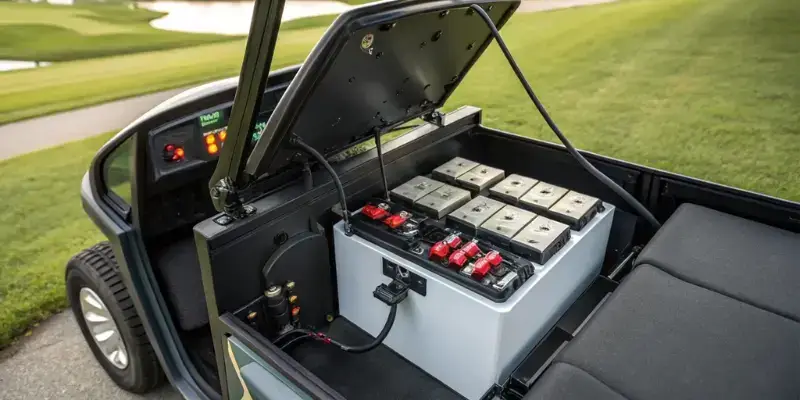
Comparing electric golf cart batteries and gas-assisted golf cart batteries makes it easy to understand the differences.
Performance & Life:
The main difference between electric golf cart batteries and gas-assisted golf cart batteries is how they perform over time.
Electric Cart Batteries:
- long-lasting golf cart batteries, which include Lead-Acid golf cart batteries, AGM golf cart batteries, and Lithium-Ion golf cart batteries. These are designed to provide power fora long time, which allows to travel many miles on a single charge
Lifespan varies by type:
- Lead-acid: 4–6 years with proper maintenance
- AGM: 5–7 years
- Lithium-Ion: 10+ years with minimal upkeep
- The performance of electric golf cart batteries can gradually slow if they are overcharged or not properly maintained, it reduces both the cart’s range and acceleration.
Gas Cart Batteries:
- Starter batteries or maintenance-free AGM golf cart batteries provide a short amount of energy, primarily to start the engine and power golf cart accessories.
- Their duration is shorter because they aren’t built for continuous discharge like long-term use golf cart batteries.
- Difficulty in starting the engine or dimming lights.
Maintenance & Cost:
Maintenance and cost are key factors when comparing electric and gas golf cart batteries.
Electric Cart Batteries: long-lasting golf cart batteries require once in a while maintenance, especially Lead-Acid golf cart batteries, which need water level checks and terminal cleaning. AGM golf cart batteries and Lithium-Ion golf cart batteries are mostly easy to care for, though they come with higher costs.
Gas Cart Batteries: Starter batteries and AGM golf cart batteries for gas-assisted golf carts are generally easier to maintain. Conventional starter batteries for gas carts need no attention, while AGM golf cart batteries are sealed and virtually easy to care for. Their prices are usually lower than those of electric golf cart batteries, but they have a shorter duration and may require more replacements.
Key takeaway: Electric batteries demand more care but offer longer-term value, whereas gas cart batteries are cheaper and easier to maintain but require more frequent replacement.
Choosing the Right Battery
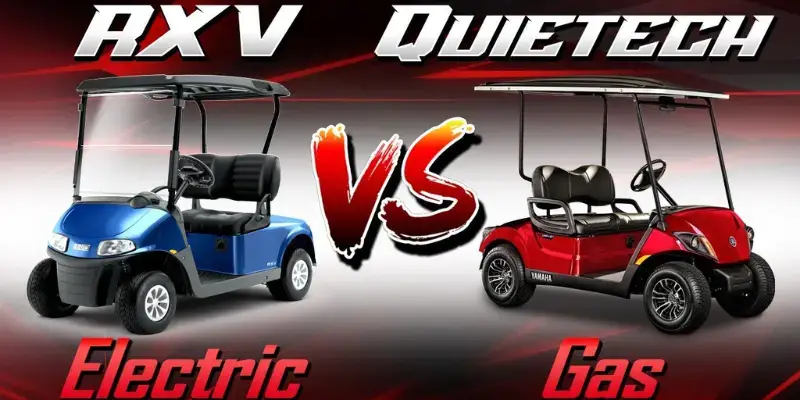
Choosing the right golf cart battery depends on your cart type, how you use it, and whether you prioritize performance, duration, or low-maintenance operation.
For Personal vs Fleet Use:
When choosing a golf cart battery, your intended use makes a big difference.
Personal Use: For beginner electric golf carts and home use, a budget-friendly option like AGM golf cart batteries or conventional Lead-Acid golf cart batteries is good for them. These batteries are reliable, easy to manage, and come with a lower investment. Lithium-Ion golf cart batteries are also a good choice for those who need higher performance, and once in a while.
Fleet or Commercial Use: Carts that see frequent use, such as in resorts, golf courses, or campuses, benefit from high-performance Lithium-Ion golf cart batteries. These batteries can allow frequent charging and heavy usage, reduce downtime, and require minimal maintenance. While the cost of Lithium-Ion golf cart batteries is higher, they are highly cost-effective over time thanks to their long duration and reliability.
Key takeaway: Match your battery choice to how often and intensively you’ll use the cart. Personal use favors budget-friendly options, while fleet use demands durability and efficiency.
Compatibility & Maintenance Tips:
It’s important to make sure you select a golf cart battery that matches your cart’s voltage system and brand. Using the wrong battery can reduce efficiency and may even harm the cart’s electrical system. Always consult your golf cart manual for specific guidance.
Regular maintenance is also key to keeping batteries healthy. For Lead-Acid golf cart batteries, it’s important to check electrolyte levels, clean terminals, and avoid deep discharges. AGM golf cart batteries and Lithium-Ion golf cart batteries require much less maintenance thanks to their energy-dense designs, making them easier to care for over time.
Conclusion:
The type of golf cart battery you choose, whether electric golf cart batteries or gas-assisted golf cart batteries, has a high impact on both performance and long-term costs. For electric carts, options include Lead-Acid golf cart batteries, AGM golf cart batteries, and Lithium-Ion golf cart batteries, each of which depends on budget and maintenance needs. Gas-assisted golf carts typically use starter batteries or easy-to-care AGM golf cart batteries to start the engine when running on gas.
Understanding voltage configurations, amp-hours, and battery capacity, along with your usage personal, fleet, or commercial, helps you make a decision. Proper maintenance and ensuring battery compatibility with your cart will maximize both duration and performance.
The right battery choice ensures smooth rides, reliable starts, and years of enjoyable golf cart operation.
FAQs
What is the best battery for an electric golf cart?
The best battery for an electric golf cart depends on your budget and usage. Lead-acid golf cart batteries are affordable but require maintenance. AGM golf cart batteries are low-maintenance and reliable. Lithium-ion golf cart batteries offer the longest life, fast charging, and high performance.
Can a gas golf cart run without a battery?
No. A gas golf cart cannot run without a battery because the battery is needed to start the engine and power accessories such as lights and radios.
How long do golf cart batteries last?
Golf cart battery lifespan depends on the type and how well it is maintained. Lead-acid batteries usually last 4 to 6 years, AGM batteries last 5 to 7 years, lithium-ion batteries can last more than 10 years, and starter batteries for gas golf carts typically last 2 to 4 years.
How do I maintain a golf cart battery?
Golf cart battery maintenance varies by type. Lead-acid batteries need regular water checks, clean terminals, and shallow discharges. AGM and lithium-ion batteries require proper charging and correct storage. Keeping batteries at normal temperatures improves performance and lifespan.
What is the difference between a starter battery and a golf cart battery?
A starter battery provides a short burst of power to start a gas engine. A golf cart battery is designed to supply steady power over a long period to run an electric golf cart.
How do I know which voltage system my golf cart needs?
You can find the correct voltage by checking your golf cart manual or the existing battery setup. Most electric golf carts use 36-volt, 48-volt, or 72-volt battery systems.
Are lithium-ion golf cart batteries worth the extra cost?
Yes. Lithium-ion golf cart batteries last longer, charge faster, weigh less, and require almost no maintenance, which often makes them more cost-effective over time.
Can I mix different types of golf cart batteries?
No. Mixing different battery types, brands, or ages can cause uneven charging, reduced performance, and a shorter battery lifespan.
How can I extend the life of my golf cart battery?
You can extend battery life by charging regularly, avoiding deep discharges, keeping terminals clean, storing batteries in a cool and dry place, and monitoring the battery’s state of charge.
What is the main difference between electric and gas golf cart batteries?
Electric golf carts rely on long-term golf cart batteries for power. Gas golf carts use batteries mainly to start the engine and operate accessories.