
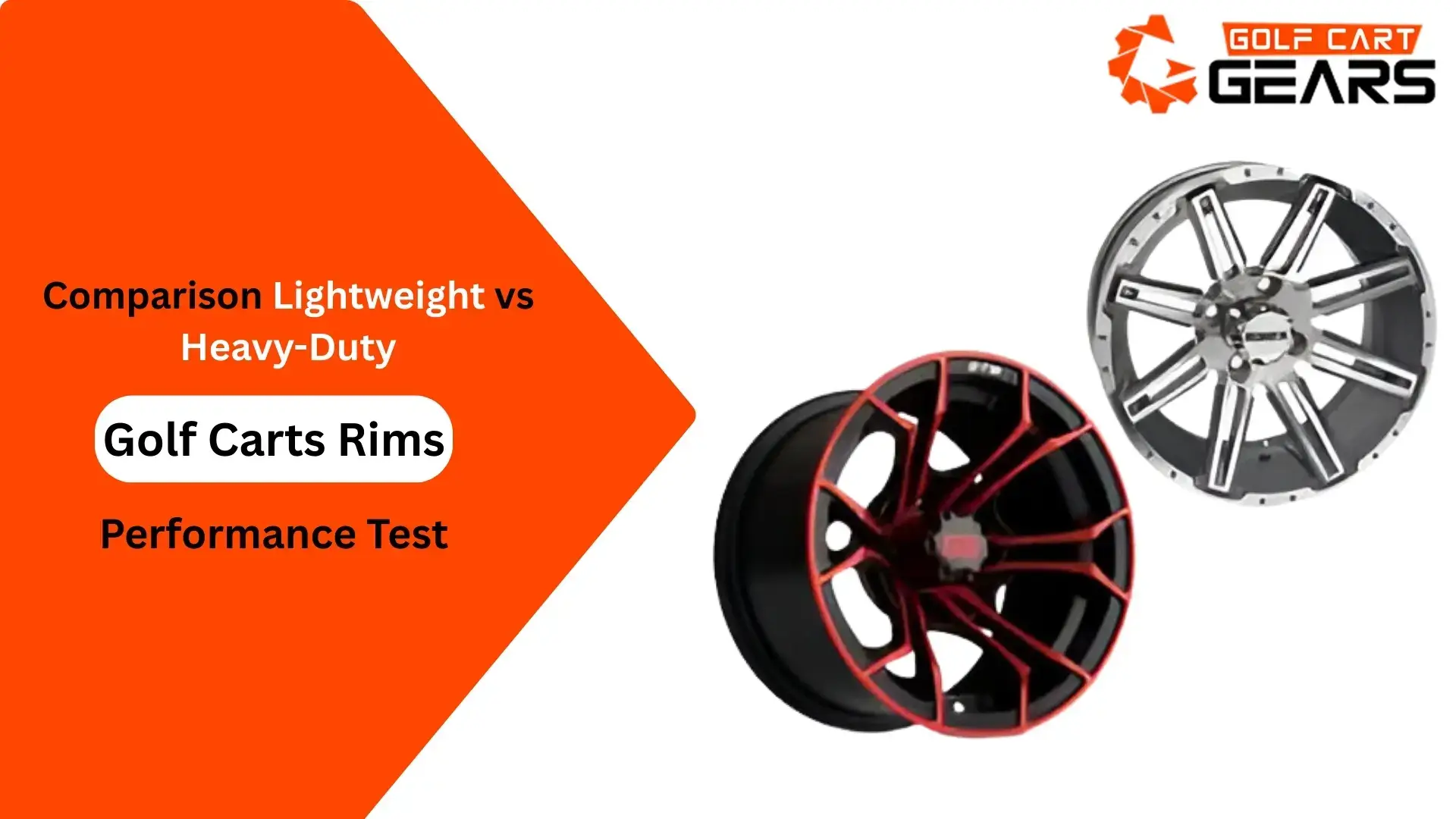
The selection of right Golf Cart Rims may make a significant impact on the dynamics of vehicles, the nature of their handling, and their overall performance. The heavy-duty rims are focused more on strength and durability, whereas lightweight rims are focused more on speed andagility. In this comparative analysis both the categories are put through rigorous testing in order to make a wise choice.
Table of Contents
Why Rim Weight Matters — Lightweight vs. Heavy-Duty in Action
The mass of golf cart rims influences nearly all the aspects of performance such as acceleration and handling, ride comfort and stability. The light rims make the vehicle more responsive whereas the heavy rims accuse the vehicle greater stability on rough surfaces or when carrying heavy loads.
How Lightweight Golf Cart Rims Boost Speed and Handling
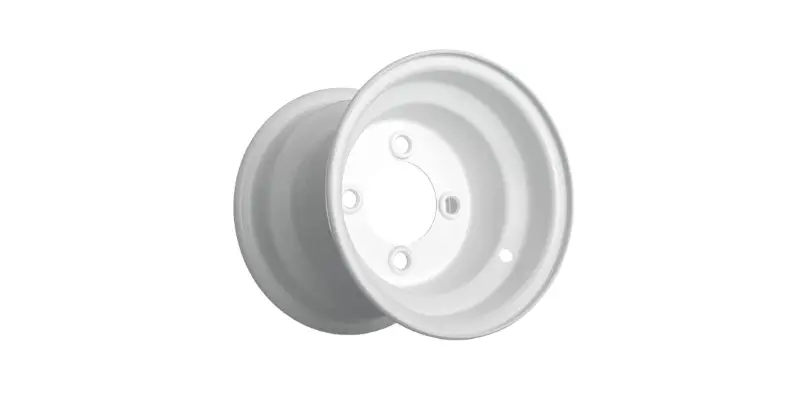
Incorporation of lightweight rims reduces the total weight that has to be moved, and thus make the vehicle accelerate much faster and also, make steering easier. They particularly belong on well-kept roads, groomed courses and daily driver situations where brute strength is not needed in lieu of agility.
- Faster acceleration and quicker turns
- Improved handling and maneuverability
- Less stress on the motor and suspension
- Reduced fuel/electric consumption for extended use
When to Use Lightweight Rims:
- Flat terrain or golf course use
- Daily neighborhood driving
- Performance-focused carts
How Heavy-Duty Golf Cart Rims Improve Stability and Control
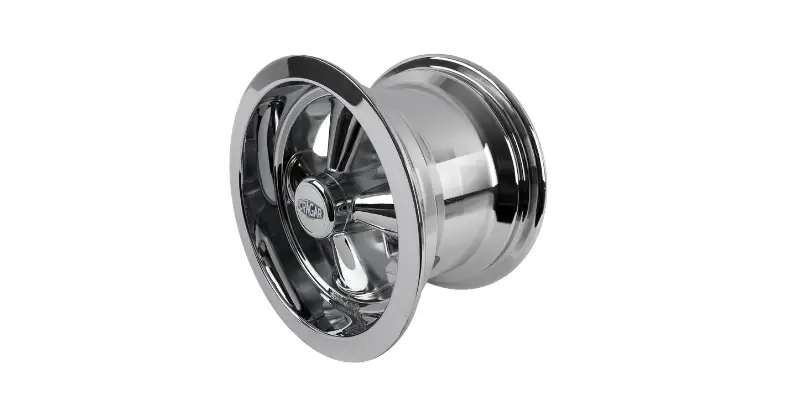
The heavy-duty rims are designed to cope with mechanical loads, increased weight and hard terrain. Although these might slightly slow acceleration, their greater mass improves stability, braking and performance upon gradients, rough trails or even when transporting passengers and cargo.
- Increased strength and durability
- Better handling on rough terrain
- Improved braking and stability
- Can carry heavier loads safely
Best For:
- Off-road and trail driving
- Utility or work carts
- Lifted or fully loaded carts
Comparing Lightweight and Heavy-Duty Rims in Everyday Driving
Understanding how each rim type performs in everyday situations helps you pick the right one. Here’s a quick comparison table for clarity:
| Feature | Lightweight Rims | Heavy-Duty Rims |
| Acceleration | Faster | Moderate |
| Handling | Sharper, more agile | Stable, controlled |
| Ride Comfort | Smooth on flat surfaces | Stable on rough terrain |
| Load Capacity | Moderate | High |
| Best Use | Streets, golf courses | Trails, utility carts |
In simple terms, lightweight rims are ideal for speed and responsiveness, while heavy-duty rims excel at stability and load-bearing. Choosing depends on your driving style, terrain, and usage needs.
Head-to-Head Performance — Lightweight vs. Heavy-Duty Tested
The difference between lightweight and heavy-duty rims is most apparent at least when it comes to performance. Pitting the two against each other in acceleration, handling and ride–comfort tests, we enlighten ourselves on the effects that each has on the actual driving experience of the golfer. The data will help in choosing rims that will match the desired driving experience and the nature of the terrain that is usually experienced.
Acceleration and Top Speed — Lightweight vs. Heavy-Duty Face-Off
The advantage of lightweight rims is that one gains a perceivable increase in speed and acceleration because of lower rotational weight. Heavy–duty rims are slower than normal but provide a better level of control and momentum under heavier loads.
- Lightweight rims = faster start and quick turns
- Heavy-duty rims = steady performance under load
- Weight differences affect energy efficiency for electric or gas carts
| Rim Type | 0-15 mph (seconds) | Top Speed (mph) |
| Lightweight | 3.8 | 19 |
| Heavy-Duty | 4.5 | 17 |
Handling and Cornering — Lightweight vs. Heavy-Duty in Turns
Rim weight has a tremendous influence on handling. Reduced weight rims react to steering impulses more quickly, which eases the process of maneuvering through narrow turns. Heavy-duty rims give the sensation of being planted and they are stable on slopes and rough surfaces. The two configurations have their advantages depending on the conditions of driving.
- Lightweight rims = nimble, quick response
- Heavy-duty rims = stable, less prone to sliding
- Terrain type dictates which rim performs better
Ride Comfort and Vibration — How Rim Weight Changes the Feel
Though normally ignored, ride comfort is vital in long journeys. Lightweight rims have less vibration to the trail over rough trails that could exaggerate the bumps. Heavy duty rims though slower to some degree, contain vibrations, as they provide the passengers with a more stable feel.
- Lightweight rims = better for speed, slightly harsher ride
- Heavy-duty rims = more cushioned on rough terrain
- Passenger comfort improves with stability and reduced wheel flex
Durability and Load Capacity — Strength Test for Lightweight vs. Heavy-Duty
Handling or speed are as unimportant in the real world as durability and load capacity. Lriohe rims help in accelerating, but they could bend easily when subjected to intense usage, heavy-duty rims are meant to stay stable, resist off-road use, curbs, and cargo.
Impact Resistance — Lightweight vs. Heavy-Duty on Rough Terrain
Rims designed are heavy-duty and are abused with ease. Potholes, rocks and curbs are not very hazardous, but the lightweight rims can become dented or bent under similar circumstances. The choice must be based on the common driving conditions and severity of the terrain.
- Lightweight Rims: Best for smooth surfaces, moderate trails
- Heavy-Duty Rims: Excellent for off-road, rough trails, lifted carts
- Tip: Heavier rims absorb shocks better and reduce wheel stress
Load Capacity — How Lightweight vs. Heavy-Duty Rims Carry Weight
Carts that carry passengers, equipments or utility cargo have very critical load capacity. His heavy-duty rims can support more weight without compromising stability and lightweight rims are superior in the solo/light-cargo situation. The selection of the rim type should be in line with the expected loads to prevent the premature wear and improve safety.
- Lightweight rims: Moderate loads, agile performance
- Heavy-duty rims: Maximum loads, stable and strong
- Overloading lightweight rims can shorten lifespan
Long-Term Durability — How Lightweight vs. Heavy-Duty Rims Age
Heavy-duty rims are usually more successful in the long-term durability. They have a longer resistance to cracking, bending and corrosion as compared to their lightweight counterparts particularly off-road or high-use applications. Lightweight rims can require a higher rate of replacement in case they undergo more frequent stress, but they can do remarkably well when used with a moderate or smooth usage.
- Inspect rims regularly for cracks or bends
- Avoid overloading lightweight rims
- Clean and dry rims to prevent corrosion
- Heavy-duty rims need less frequent replacement
| Feature | Lightweight Rims | Heavy-Duty Rims |
| Impact Resistance | Moderate | High |
| Load Capacity | Moderate | High |
| Lifespan on Rough Terrain | Medium | Long |
| Maintenance Frequency | Moderate | Low |
Choosing the Right Rims — Match Lightweight or Heavy-Duty to Your Needs
The choice of the right rims is not simply a matter of taste, it is a balance between the performance and the driving style, the nature of the terrain and driving habits. Lightweight rims are very effective in the area that requires speed and agility; heavy–duty rims are very effective in durability and weight carrying. A good insight into these differences would make sure that a person selects rims that are in harmony with their needs.
When Lightweight Rims Make the Most Sense
Golf carts that mainly follow the streets or smooth courses, or flat grounds, should use lightweight rims. They improve acceleration, handling and fuel economy, thus making normal driving more enjoyable.
- Smooth roads and golf courses
- Solo rides or light passenger loads
- Drivers who value speed and maneuverability
- Electric carts needing efficiency boost
When Heavy-Duty Rims Are the Better Choice
Heavy-duty Rims are best suited to carts that are facing rough paths, big loads or off-road. They are stable and strong and make them reliable when transporting cargo, over rough terrain, or when used in utility or uplifted mode.
- Off-road trails and rugged terrain
- Heavy passenger or cargo loads
- Utility, lifted, or work carts
- Drivers prioritizing durability over speed
Quick Guide — Decide Between Lightweight and Heavy-Duty Rims Fast
For a simple way to decide, use this quick reference table based on performance, durability, and terrain:
| Feature / Need | Lightweight Rims | Heavy-Duty Rims |
| Acceleration & Speed | Excellent | Moderate |
| Handling & Agility | Sharp & responsive | Stable & planted |
| Off-Road Performance | Moderate | Excellent |
| Load & Cargo Capacity | Moderate | High |
| Best Use | Street, course, light loads | Trails, utility, heavy loads |
This guide helps you make a confident, quick decision without guessing. Pick rims that match how and where you drive.
Ready to Upgrade Your Golf Cart Rims?
Ready to Upgrade Your Golf Cart Rims?
Don’t settle for rims that limit your performance. Whether you need lightweight rims for speed and agility or heavy-duty rims for strength and durability, Golf Cart Gears has the perfect match for your driving style.
Why From Choose Golf Cart Gears?
- ✓ Wide selection of lightweight and heavy-duty rims
- ✓ Compatible with EZGO, Yamaha, and Club Car models
- ✓ Premium materials built for performance and longevity
- ✓ Fast shipping across the USA
- ✓ Expert guidance to match rims to your terrain and needs
- ✓ Quality guaranteed
Not sure which rim type is right for your cart? Our team can help you choose based on your terrain, load requirements, and performance goals. Browse our complete collection online or reach out for personalized recommendations!
FAQs!
What’s the main difference between lightweight and heavy-duty golf cart rims?
Lightweight rims focus on speed, handling, and energy efficiency, while heavy-duty rims prioritize durability, stability, and load capacity. Choosing depends on your terrain, cart use, and performance priorities.
Are lightweight rims less durable than heavy-duty rims?
Not necessarily. Lightweight rims are durable for smooth streets and golf courses, but heavy-duty rims handle rough terrain, heavy loads, and off-road conditions better.
Do lightweight rims improve acceleration on all golf carts?
Yes, reducing rim weight improves acceleration and steering response on most carts, but the effect is most noticeable on electric or lighter gas carts.
Can I use heavy-duty rims for street driving?
Absolutely. Heavy-duty rims work fine on streets, but they may slightly reduce top speed and acceleration compared to lightweight rims. They’re better for stability and handling under load.
How do I know which rims suit my golf cart best?
Consider your driving style, terrain, and load. Lightweight rims are ideal for speed and agility; heavy-duty rims are perfect for off-road, utility, or lifted carts. Use our quick guide table for a fast decision.
Do rim materials matter — aluminum vs steel?
Yes. Aluminum rims are lighter, resist corrosion, and improve performance. Steel rims are stronger, heavier, and better for heavy-duty or off-road use. Match the material to your rim type and needs.
How can I maintain my rims to last longer?
Regularly inspect for bends, cracks, or corrosion, clean rims after exposure to dirt or water, and avoid overloading lightweight rims. Proper maintenance ensures longer performance for both types.